Public Consultation Submission on the HKSAR Government’s First Five-Year Plan (2026–2030)
The Pacific Early Childhood Education Research Association (Hong Kong) (“the Association”) serves as a platform for academic exchange and collaboration among early childhood education researchers, practitioners, and professionals dedicated to promoting the development and well- being of young children. Grounded in professional evidence and practice, the Association has long been dedicated to advancing the holistic development of young children in Hong Kong and enhancing the quality of early childhood care and education. Children’s growth and development have always been among the Association’s core concerns.
The coming five years represent a pivotal period for Hong Kong to align with the National 15th Five-Year Plan and strengthen its long-term development momentum. The Association welcomes the HKSAR Government’s public consultation on the inaugural Hong Kong Five- Year Plan (2026–2030), which provides a valuable platform for fostering cross-sector consensus and charting Hong Kong’s future strategic direction in line with a people-centred vision of development.
Children’s well-being and early development form the foundation of a sustainable and inclusive society. In response to the “People’s Livelihood and Social Development” section of the consultation document, the Association draws on academic research and professional expertise to present policy recommendations across five key domains: Education and Care, Medical and Health Services, Social Welfare, Community Building, and Industry and Technology, for the Government’s consideration.
I. Education and Care: Building an Evidence-Based and Professionally Integrated Early Childhood Education System
UNESCO stresses that Early Childhood Care and Education (ECCE) aims to promote the holistic development of children aged 0–8. This is not merely preparation for primary education, but also the foundation for emotional well-being, lifelong learning, and personal and social value. It is among the best investments a country can make to advance holistic development, gender equality, and social cohesion (United Nations Educational, Scientific and Cultural Organization, 2024). While international experience provides valuable reference, Hong Kong should develop its early childhood education and care system based on local evidence and local needs. To ensure the effective deployment of public resources and continuous improvements in education quality, the Government should strengthen two fundamental pillars: robust local evidence and a stable professional workforce. The former provides the foundation for evidence- informed policymaking and service planning, while the latter enables the effective delivery of quality services. Strengthening both pillars in tandem is essential to safeguarding the best interests and well-being of young children.
Recommendation 1. Strengthen Research and Leverage Evidence-Based Data
We recommend allocating dedicated resources to strengthen collaboration among tertiary institutions, researchers, and the early childhood education sector, promoting local evidence- based research and advancing a dual-track approach of research and teaching. This would support the development of locally relevant curricula, enhance professionals’ access to emerging knowledge and best practices, and provide the Government with robust data to inform policy development and improve continuity across learning stages. The Government should also encourage collaboration between the sector and academia to adopt credible, objective indicators and establish a culture of continuous improvement in kindergartens and child care centres. By integrating research findings with professional practice, enhancing curriculum and assessment frameworks, and facilitating cross-sector knowledge exchange, the sector can cultivate local expertise and strengthen the quality of integrated education and care services.
Recommendation 2. Establish a Central Child Development Database for Longitudinal Tracking from Birth to Age 18
We recommend the establishment of a Central Child Development Database covering ages 0– 18, with reference to Article 1 of the United Nations Convention on the Rights of the Child, which defines a child as a person below the age of 18. Aligning with the target population of Hong Kong’s Commission on Children, the database should cover the key developmental stages of early childhood, primary and secondary education, enabling the systematic collection, integration and analysis of developmental and environmental data. Such a database would support longitudinal tracking of child development, facilitate the early identification of developmental needs and risks, and provide a transparent and robust evidence base for education, population and welfare policies. It would also strengthen policy planning, service design and resource allocation.
We further recommend that the data be used to inform teacher education, professional development, service planning, and the design of education, welfare and care policies. This would help ensure that interventions are responsive to the needs of Hong Kong children, strengthen the link between research and practice, and translate research findings into improvements in caregiving, education and overall service quality.
Recommendation 3. Enhance Teacher Training and Establish Mutual Recognition of Qualifications and Pay Scales
We recommend a comprehensive review of the curriculum and practicum requirements of early childhood education diploma and degree programmes to strengthen integrated professional training for children aged 0–6. Greater emphasis should be placed on knowledge and practical competencies in infant and toddler care, nutrition, self-care training, and physical development. Practicum placements in child care centres should also be incorporated into teacher-training programmes, enabling prospective early childhood educators to gain first-hand experience across different service settings. This would equip practitioners with a holistic understanding of the developmental trajectories, care needs, and learning requirements of children aged 0–6, and enhance their capacity to deliver an integrated model of education and care, in which learning and care are mutually reinforcing.
Recommendation 4. Review Planning Standards for Child Care Centres and Update the Child Care Services Regulations and Operation Manual for Pre-primary Institutions
The current Child Care Services Regulation and the Operation Manual for Pre-primary Institutions, jointly issued by the Education Bureau and the Social Welfare Department, continue to reflect a welfare-oriented approach developed in the 1970s. As a result, existing requirements for child care centres, including floor space standards, site selection and building requirements, spatial planning, and facilities provision, may no longer adequately meet children’s developmental and learning needs.
As expectations of early childhood services have evolved from safe care and basic supervision to integrated education and care, holistic development, and nurturing through the environment, we recommend a comprehensive review of the planning standards and regulatory requirements governing child care centres. Drawing on the latest professional standards adopted by recognised local and international authorities, the Government should expedite the revision of the relevant regulations and operational guidelines to create high-quality early childhood environments that support contemporary education and care objectives.
Recommendation 5. Harness the First 3,000 Days and Expand Child Care Centres into community education and care support platforms
The first 3,000 days of life, from pregnancy to around age eight, represent a critical window for children’s brain development and holistic growth (Saracho, 2023). According to the latest statistics from the Census and Statistics Department and the Social Welfare Department, only around 3% to 4% of children aged 0–2 are served by subsidised standalone child care centres (HKSAR Government, 2026), indicating that most infants and toddlers grow up without access to professional support.
We recommend increasing investment in child care centres and leveraging the expertise of early childhood educators and child care workers to expand their role from institutional child- minding services into “Community Education and Care Support Platforms”. Through collaboration with Maternal and Child Health Centres and AI-enabled platforms, child care centres could provide families with children aged 0–3 with professional parenting guidance, early developmental support, and timely referrals. This would extend professional support into the community, strengthen the network of services available to children and families, and provide new parents with greater confidence and practical support in raising young children, thereby helping to foster a more family-friendly environment for childbearing.
II. Medical and Health Services: Strengthening Medical Support for Infants and Toddlers and Building a Primary Healthcare Safety Net
As children aged 0–2 have yet to develop mature physiological and immune functions, they require frequent medical attention and are more vulnerable to illness. We recommend adopting a prevention-oriented, primary healthcare approach to build a comprehensive medical safety net for families with young children. Hong Kong’s persistently low birth rate poses long-term challenges to productivity and the dependency ratio. Providing sustained support for families with infants and toddlers is therefore an important measure to support childbearing and family formation. Research shows that public investment in early childhood health and education generates substantial economic returns, with every dollar invested yielding up to thirteen dollars in benefit (Heckman, 2006; Reynolds et al., 2011; Save the Children, 2018). Early childhood development should therefore form part of Hong Kong’s long-term strategic planning for sustainable social development.
Recommendation 1. Introduce Infant and Toddler Healthcare Vouchers Scheme to Strengthen Family Doctor Support
We recommend introducing an Infant and Toddler Healthcare Voucher Scheme for children aged 0–3, drawing on the Elderly Health Care Voucher Scheme. The vouchers would subsidise private primary healthcare services and encourage regular health and developmental assessments. This would help establish an effective triage mechanism, alleviate pressure on accident and emergency departments and general outpatient clinics, and foster long-term relationships between families and private paediatricians or family doctors. Such an approach would strengthen the family doctor model, enabling earlier identification of developmental concerns and maternal postnatal health needs, facilitating timely intervention where necessary, and helping to build a more supportive environment for young families.
Recommendation 2. Enhance the Clinical Functions of Maternal and Child Health Centres and Establish a District-based Healthcare Consultation and Support Network
We recommend enhancing the clinical functions of Maternal and Child Health Centres by stationing doctors to provide infant and toddler outpatient and basic treatment services, and by deploying community health nurses to conduct regular home visits to families with newborns and children aged 0–2. These nurses could provide guidance on infant care, including bathing, feeding, sleep management and parent-child interaction, while helping families establish healthy routines.
We further recommend establishing a district-based support network linking each district with dedicated paediatric nurses or doctors to provide healthcare consultation and infection-control support to infant homes and child care centres. This would assist caregivers in identifying and mitigating home safety risks, while strengthening preventive care and community-based support.
Recommendation 3. Expand the Community Role of Child Care Centres and Establish Community Parenting Resource Centres
We recommend further expanding the role of aided standalone child care centres by providing additional manpower and space resources to develop them into community parenting resource centres for families with young children. In collaboration with Maternal and Child Health Centres, these centres could offer regular workshops on newborn care, home safety, accident prevention and healthy family lifestyles. They could also facilitate parent support groups for both centre-based and community families, helping to foster stronger networks of mutual support within the community.
III. Social Welfare: Regularising Pro-birth Measures and Child-Priority Public Housing Planning
According to the World Population Prospects 2024 published by the United Nations (2024), the replacement-level fertility rate required to maintain a stable population is approximately 2.1 children per woman. Hong Kong’s total fertility rate has fallen below 0.8, placing the city at risk of population decline and rapid ageing. We recommend a long-term and strategic approach to addressing these demographic challenges. Drawing on the public childcare experience of OECD economies, short-term incentives should evolve into sustained support measures, complemented by community and employer participation. Continued efforts to strengthen family-friendly policies and reduce the costs of raising children will be essential to supporting higher fertility rates.
Recommendation 1. Formulate a Comprehensive Population Policy and Establish a High- level Steering Committee
We recommend formulating a comprehensive population policy and establishing a standing Population Policy Planning and Steering Committee, chaired by the Chief Executive and comprising policy secretaries and representatives from academia, business, culture and creative industries, and the social welfare sector. This would enable a more coordinated approach to long-term population planning across housing, healthcare, welfare and education, moving beyond the current emphasis on manpower and workforce development.
We further recommend establishing a dedicated cross-bureau mechanism for population and child-related policies, supported by greater data sharing across education, healthcare and social welfare services. This would strengthen evidence-based planning, facilitate more effective resource allocation, and support the development of child- and family-friendly policies.
Recommendation 2. Regularise Birth-related Financial Support and Promote Family- friendly Employment Measures
We recommend transforming current short-term or one-off birth incentives, including cash grants, tax concessions and child care subsidies, into sustained policy measures that provide longer-term support for families. We further recommend increasing subsidies for child care centre services to cover up to 50% of costs through a shared-responsibility approach between the Government and parents. Additional tax incentives could be provided to employers that implement family-friendly practices, such as flexible working arrangements and parental leave, to foster a more supportive environment for child-rearing.
Recommendation 3. Embed Child-Priority Principles in Public Housing and Community Planning
We recommend integrating child-friendly and child-priority principles into public housing and community planning, including the provision of priority allocation of public rental housing for eligible families with newborn children. Such measures would provide meaningful housing incentives and improve the living conditions of families raising young children.
We further recommend strengthening the planning of community welfare services and public facilities, including infant care, childcare, healthcare and education services in public housing estates and local communities. This would help ensure that children can access essential services and support within familiar neighbourhoods, advancing the principle of “in-district development and local support” while fostering a more child- and family-friendly community environment.
IV. Community Building: Building a Child-friendly City through Comprehensive Community Support
To align with the National 15th Five-Year Plan’s objective of advancing child-friendly development across society and with global trends, we recommend that the Government include the goal of developing Hong Kong into a UNICEF-recognised Child Friendly City in the next Hong Kong Five-Year Plan. Research in developmental neuroscience, including studies by the Center on the Developing Child at Harvard University, highlights early childhood as a critical period of brain plasticity, during which observation, exploration and play support the development of creativity, problem-solving and self-directed learning (The Center on the Developing Child at Harvard University, 2026). As children’s development is closely influenced by their community environment, we recommend integrated planning of public facilities and community resources, supported by child-friendly design guidelines, inclusive play spaces and parent-child exploration opportunities to promote children’s well-being and holistic development.
Recommendation 1. Embed Children’s Rights Principles in Public Policy and Community Planning
We recommend embedding children’s rights principles into urban planning, urban renewal and public policymaking through an appropriate legislative and policy framework. Children should be recognised as active stakeholders in the city, with structured opportunities to express their views and participate in the design of parks, nature trails and public facilities. Such measures would encourage observation, curiosity and exploration, and help lay the foundations for creativity, problem-solving and self-directed learning.
Recommendation 2. Enhance Cultural and Recreational Facilities for Early Childhood Exploration
We recommend adopting an integrated approach to public education through community facilities. Museums, science and cultural venues, galleries, aquariums and other public facilities should be designed to better support exploration by children aged 0–6. Dedicated children’s zones and guided programmes could be introduced, with exhibition content updated regularly and free access provided to children aged 0–6 and early childhood education institutions. Such measures would encourage observation, curiosity and early inquiry-based learning.
Recommendation 3. Strengthen Children’s Access to Nature through Diverse Environmental Design
We recommend incorporating natural elements and environmental diversity into the planning and design of parks, nature trails, streets and public facilities. Greater opportunities for contact with nature can provide children and families with meaningful experiences and appropriate developmental stimulation. Integrating community facilities with the natural environment would support children’s physical and mental well-being while fostering healthier and more child-friendly communities.
V. Industry and Technology: Advancing Local Innovation through Government-Industry-Academia-Research Collaboration
The National 15th Five-Year Plan emphasises leveraging data resources and industrial strengths, while expanding the application of AI+ to improve people’s well-being. The Association strongly supports this direction and advocates placing technology-enabled innovation at its core, supported by cross-bureau data sharing and more targeted service delivery. We recommend that the Government play a leading role in fostering collaboration among the Government, industry, academia and the research sector, and establish a platform to connect innovative capital, AI technologies and educational needs. By translating frontline needs into practical innovation and product development, Hong Kong can strengthen service quality while promoting sustainable sectoral development.
Recommendation 1. Establish a Cross-sector Platform to Promote Government-Industry- Academia-Research Collaboration
We recommend that the Government establish a standing cross-sector platform to facilitate collaboration among the Government, industry, academia and the research sector, and to connect the early childhood sector with philanthropic funding, private capital, technology developers and manufacturers. Through closer engagement with service operators and frontline practitioners, the platform can identify operational needs and promote collaboration in research, development and practical application. Such collaboration would support the development of safe, affordable and locally relevant products tailored to Hong Kong’s early childhood education and care settings, including smart facilities and equipment that help reduce occupational strain among frontline staff. This would contribute to enhancing both the service quality and supporting infrastructure of Hong Kong’s early childhood sector.
Recommendation 2. Expand AI+ Applications and Develop Data-driven Smart Solutions
We recommend expanding the application of AI+ and digital technologies in early childhood settings, with a focus on child safety and effective home-school collaboration. The Government could support the collection and analysis of children’s developmental data to inform the design of ergonomic furniture and safety equipment suited to the needs and physical characteristics of local children.
We further recommend supporting the development of smart management tools that facilitate communication with parents, including systems that record children’s daily routines, such as meals, sleep and learning activities, and provide timely updates to families. These measures would reduce administrative burdens on frontline staff, improve service efficiency, and support the continuous enhancement of early childhood education and care through data-informed practice.
Conclusion
The Association strongly supports the Government’s development of the first Hong Kong Five- Year Plan (2026–2030) and looks forward to working closely with the Government and all sectors of society to advance a family-centred approach to policymaking. Cross-sector coordination and sustained investment in children’s early years, and to building a more liveable and prosperous international city.
The Association firmly believes that the development of a family-friendly society and a child- friendly city, together with continued investment in early childhood education and care, healthcare and family support services, can help ease the burden on families, support higher fertility rates, and strengthen Hong Kong’s long-term social and economic development. By placing children first in policy planning and service development, Hong Kong can foster a more inclusive, sustainable and vibrant future, while continuously enhancing people’s sense of fulfilment, happiness and security.
Dr. Maria Lee Wai-wan President
Dr. Sanly Kam Shau-wan, BBS, MH Chair, Policy, Advocacy & External Relations Sub-committee
Pacific Early Childhood Education Research Association (Hong Kong)
Click here for the full article Public Consultation Submission on theHKSAR Government’s First Five-Year Plan (2026–2030) The Pacific Early Childhood Education Research Association
On 9 July 2026, PECERA (Hong Kong) successfully hosted its Networking Dinner in Singapore. Hosted by Dr. Maria Lee, President of PECERA (Hong Kong), the
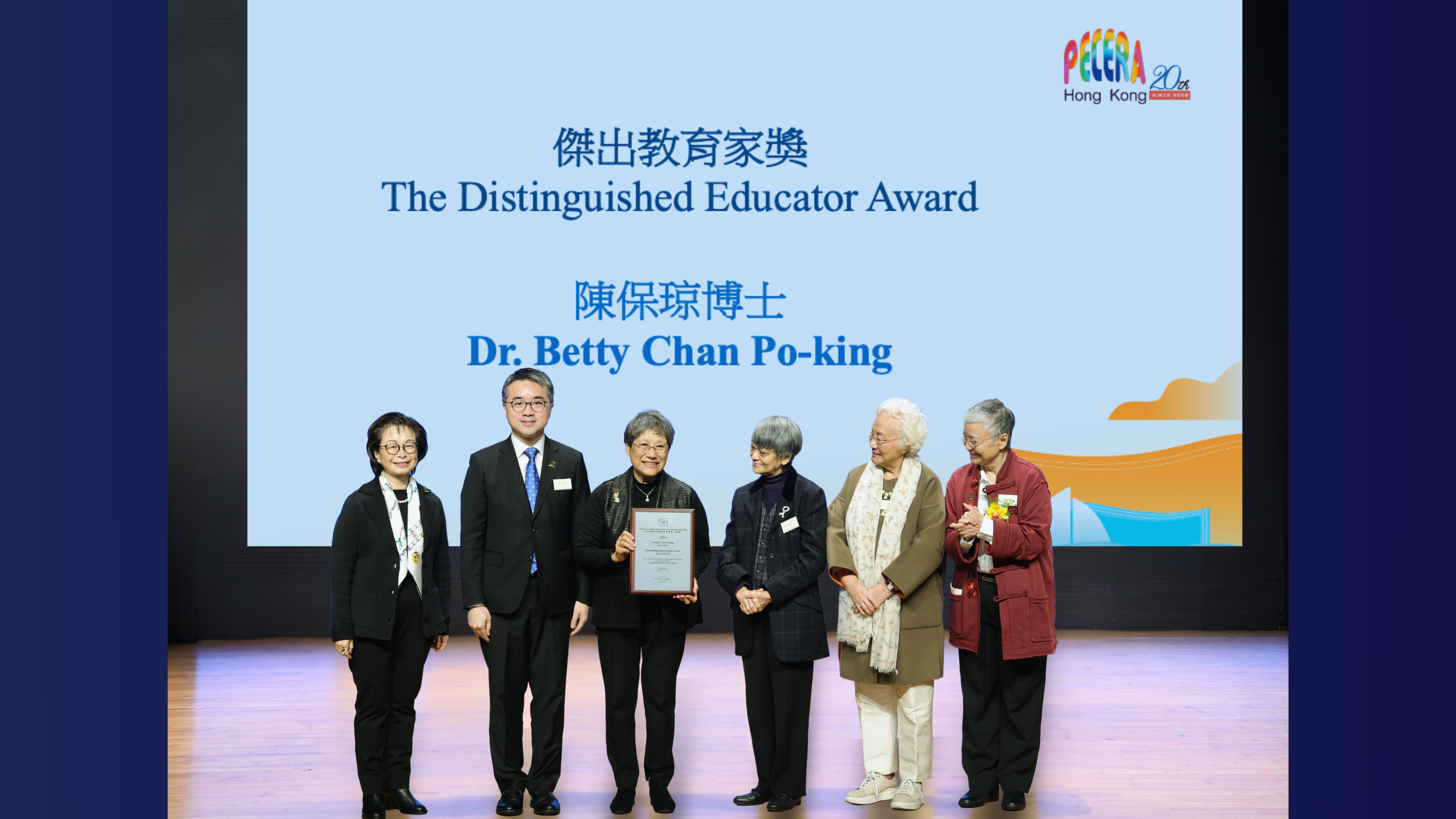
To commemorate the 20th anniversary of the Pacific Early Childhood Education Research Association (Hong Kong), and to honour local educators who have made outstanding contributions
PECERA‑HK marked a significant milestone on 7 March 2026 with our 20th Anniversary Celebration cum 2025–2026 Annual Meeting, bringing together educators, scholars, policymakers, and partners